
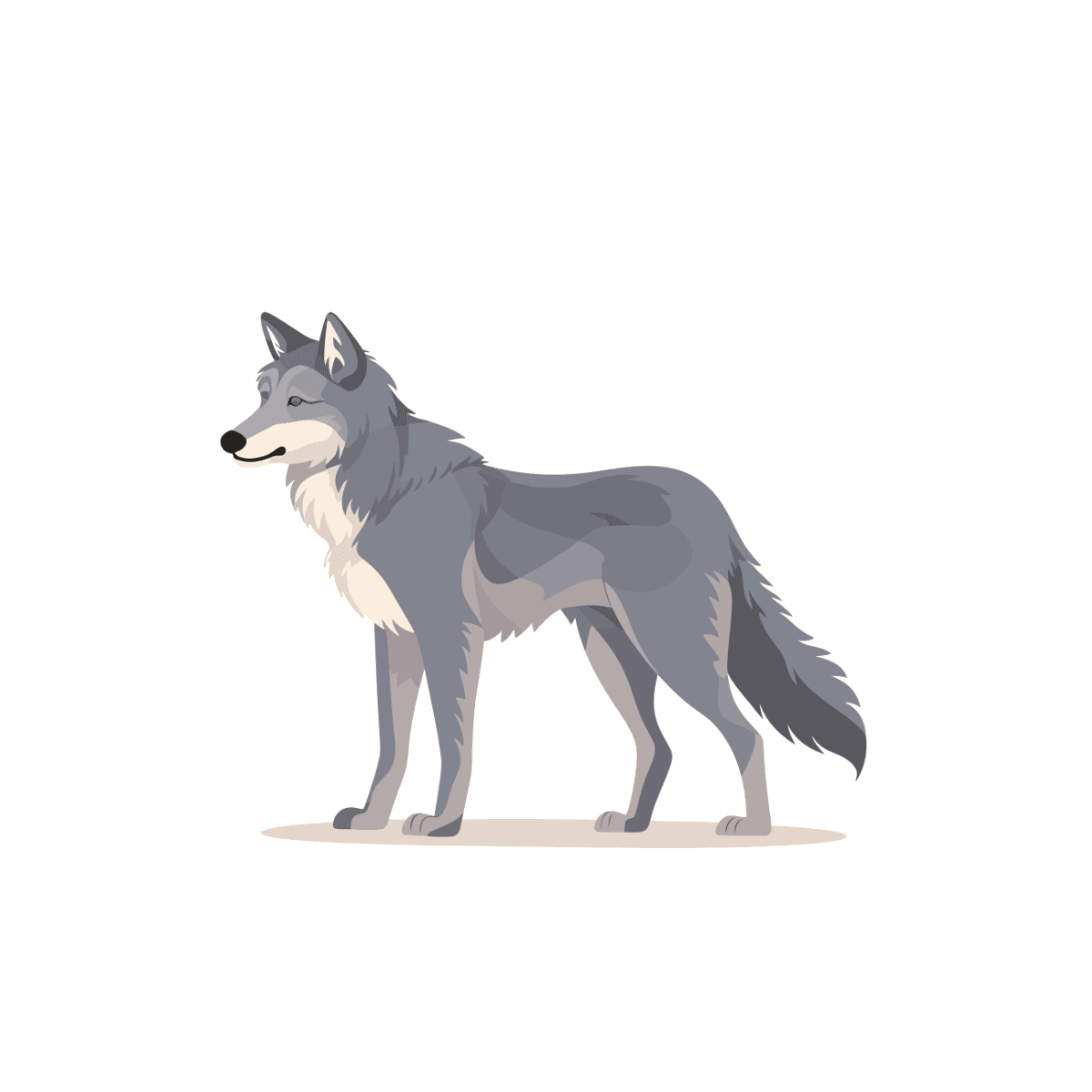
Wolf Facts
Wolves are fascinating animals that live in the wild in many parts of the world, from forests to mountains. They are known for their strong, furry bodies and their keen sense of smell and hearing. Wolves live in groups called packs, which are like big families. Each pack works together to hunt for food and take care of the young. Wolves eat meat, like deer and rabbits, and they are very good at working as a team to catch their prey. They communicate with each other using howls, barks, and growls. Wolves have a special way of moving quietly through the forest and are great at tracking scents. They play an important role in nature by keeping animal populations balanced. Wolves are clever and strong, making them one of the most interesting animals in the wild!
Habitat
Wolves live in a variety of habitats across the world, including forests, mountains, and tundras. They are very adaptable and can survive in many different environments. In North America, wolves are often found in the forests and grasslands of Canada and the northern United States. In Europe and Asia, they live in forests and mountain ranges. Wolves need large areas to roam and find food, so they usually live in places with plenty of space and prey, like deer and rabbits. They also make dens in the ground or under trees to raise their pups. Wolves are very good at adapting to their surroundings, whether it's the snowy landscapes of the Arctic or the dense woods of the forest. Protecting these habitats is important to ensure wolves have safe places to live and hunt.
Behavior
Wolves are social animals that live in groups called packs, which are like big families. Each pack works together to hunt for food, take care of the pups, and protect their territory. Wolves use their strong sense of smell and hearing to find prey and communicate with each other using howls, barks, and growls. They hunt in teams, using clever strategies to catch animals like deer and rabbits. Wolves are also playful and often play games with each other, which helps them stay close and learn important skills. At night, they might howl together to keep in touch with other pack members or to mark their territory. Wolves are very loyal to their packs, and their teamwork and communication make them excellent hunters and family members.
Facts
Explore cool and exciting facts about wolves, the clever and adventurous hunters!
01.
Social Structure: Wolves are highly social animals, living in packs led by an alpha pair – the dominant male and female. Packs can vary in size from a few individuals to over a dozen members.
02.
Territorial Behavior: Wolves are territorial animals and mark their territories with scent markings and vocalizations. They defend their territory from other wolf packs and predators.
03.
Keen Senses: Wolves have highly developed senses, including acute hearing, keen eyesight, and a strong sense of smell. These senses help them locate prey, communicate with pack members, and navigate their environment.
04.
Hunting Strategy: Wolves are skilled hunters, often targeting large ungulates like deer, elk, and moose. They use teamwork, strategy, and cooperation to bring down prey much larger than themselves.
05.
Conservation Status: While some wolf populations are stable, others are endangered due to habitat loss, hunting, and human-wildlife conflict. Conservation efforts are crucial to protect these iconic predators and their habitats.
06.
Wolves have a strong sense of family! They are dedicated parents, with both the alpha male and female caring for their pups and other members of the pack.