
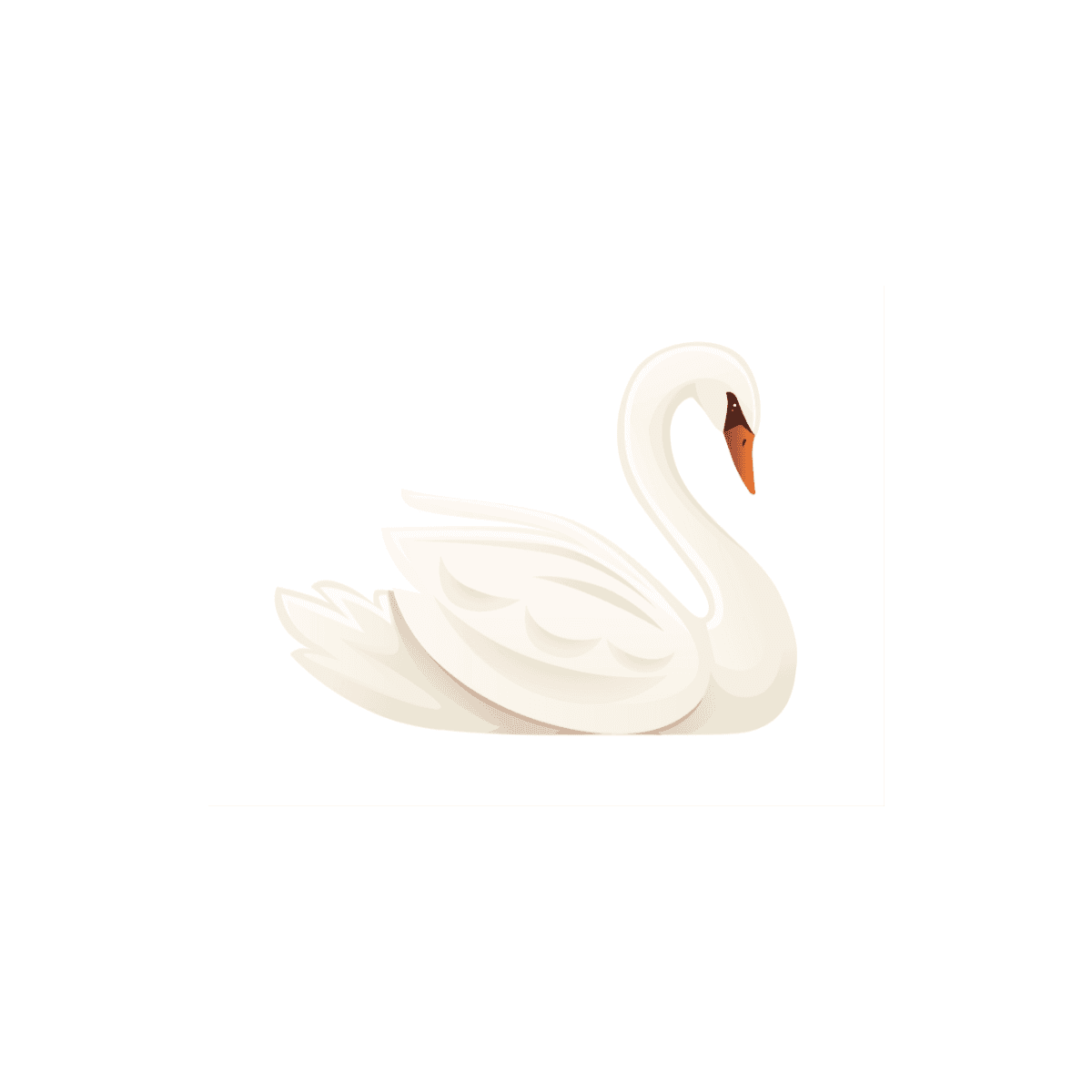
Swan Facts
Swans are elegant birds with long, graceful necks and beautiful white feathers. They glide smoothly across the water, making them look like they’re dancing on the lake. Swans have big, strong wings that help them fly high in the sky. They live near lakes, rivers, and ponds, where they can find plenty of food like water plants, insects, and small fish. Swans are known for their gentle nature and often stay with their families, taking care of their babies together. They make soft, musical sounds and can sometimes be seen making a trumpet noise. Swans are like magical creatures that add a touch of beauty wherever they go!
Habitat
Swans love to live near water, like lakes, rivers, and ponds. They like places where the water is calm and has lots of plants. Swans build their nests near the water’s edge, using reeds and grass. The water helps keep them safe from predators, and they can swim around easily to find food. Swans use their long necks to reach plants and small fish in the water. They also enjoy paddling around and playing with other swans. During winter, some swans migrate to warmer places if their home water freezes over. So, swans need water, plants, and a safe place to live to be happy and healthy!
Behavior
Swans are beautiful birds known for their graceful movements. They glide smoothly over water with their long necks curved gracefully. Swans like to swim in ponds, lakes, and rivers. They often stay in pairs and show a lot of love for each other. When they find a mate, they stay together for life! Swans use their strong beaks to find food like water plants and small fish. They also like to clean their feathers by taking baths in the water and using their beaks to spread oil from a special gland. Swans can be very protective of their nests and babies, called cygnets. If they feel threatened, they might flap their wings and make loud, hissing noises to scare away anything that might harm them. Swans are gentle and elegant, and watching them swim can be really calming and lovely!
Facts
Learn graceful and elegant facts about swans, the beautiful and serene water birds!
01.
Size and Appearance: Swans are among the largest flying birds. They have long necks, powerful wings, and distinctive white plumage (though some species, like the Black Swan, have darker plumage).
02.
Parental Care: Both parents participate in building the nest, incubating the eggs, and caring for the cygnets (young swans). They teach their offspring essential skills like foraging and swimming.
03.
Feeding Habits: Swans are herbivorous and primarily feed on aquatic plants, grasses, and algae found in shallow waters. They use their long necks to reach underwater vegetation.
04.
Longevity: In the wild, swans can live for several decades, with some species reaching ages of 20-30 years or more.
05.
They are one of the heaviest flying birds, with some species weighing up to 30 pounds (13.6 kg)! Despite their size, they can still soar gracefully through the air and swim elegantly on water.